



As IP counsel for Emaww, we are thrilled to share an exciting development in emotion detection technology. Emaww, has secured a groundbreaking patent titled "Detecting Emotions from Micro-Expressive Free-Form Movements." The invention protected by the patent holds the potential to revolutionize how we interact with our devices, enabling them to understand our emotions through subtle, almost imperceptible, physical cues. Today, we are pleased to share fascinating details of this patent and explore how it could reshape our technological landscape.
The Heart of the Patent: Understanding Human Emotions
At its core, this patent describes advanced computerized methods and systems designed to predict human emotions based on biometric data collected from subtle body movements. This isn't about reading facial expressions or voice tones but rather focusing on micro-expressive movements—tiny, often unconscious movements that can reveal our emotional state.
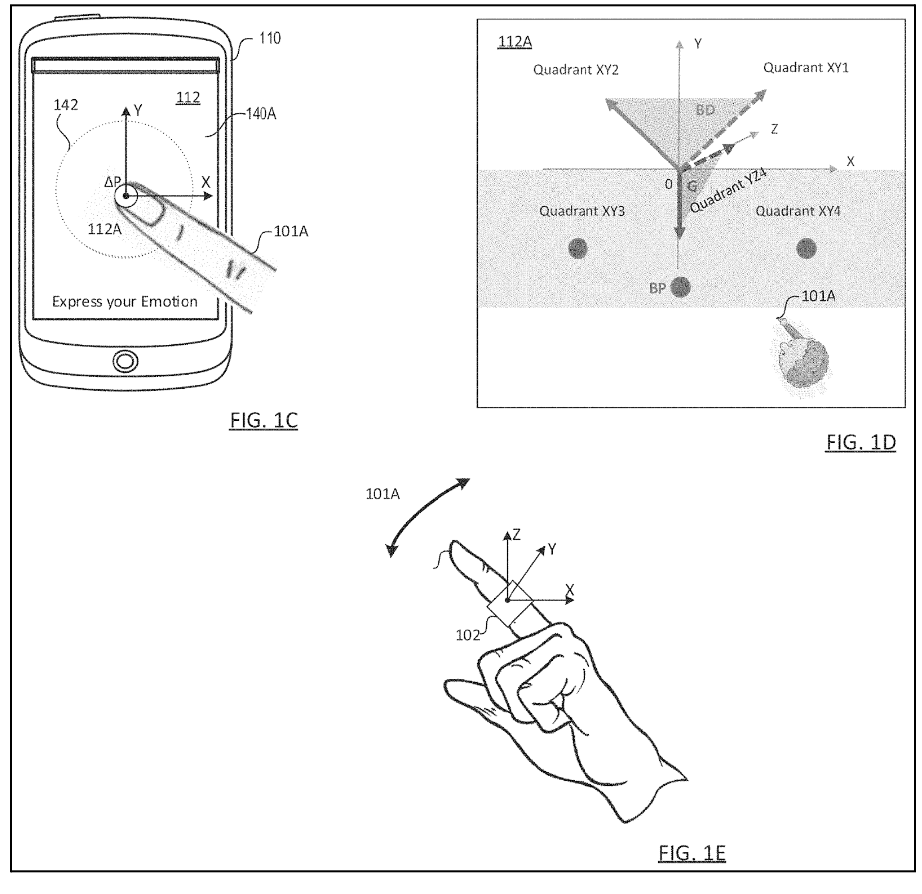
How It Works: The Mechanics Behind Emotion Detection
At a high level, the process begins with a computing system receiving initial data that captures the movements of a specific part of the body over a period. This could be anything from the way the user’s hands move while they’re talking or interacting with communication devices to the slight shifts in their posture as they sit.
- Data Collection: The system collects first data indicating these movements, which evolve over time.
- Predictive Models: It then accesses second data containing predictive models. These models are built using historical data, correlating certain movements with specific emotions.
- Pattern Recognition: Through sophisticated pattern recognition or machine learning algorithms, the system analyzes the collected movement data.
- Emotion Prediction: By comparing the current movement data with the predictive models, the system determines which default emotion (such as happiness, sadness, anger, etc.) the user is expressing.
- Data Transmission: Finally, the system provides this emotion data to a communication device, such as a smartphone or wearable device or a computer, enabling real-time feedback and/or analysis about the detected emotion.
Practical Applications: From Personal Devices to Healthcare
The implications of this technology are vast and diverse. A few potential applications include:
- Personal Devices: Imagine your smartphone or wearable detecting that you’re feeling stressed based on your interactions with the device, and automatically suggesting a meditation session or calming music playlist.
- Healthcare: Emotion detection can play a crucial role in monitoring mental health, offering insights to therapists about a patient's emotional state over time without invasive questioning.
- Customer Service: Companies could use this technology to gauge customer satisfaction in real-time, improving service and responsiveness.
- Education: Educators could receive feedback on students’ engagement and emotions, allowing for more tailored and effective teaching methods.
The Future Is Emotional: Embracing Technology with Empathy
This protected invention represents a leap forward in human-computer interaction. By enabling devices to understand our emotions through micro-expressive movements, we can create more empathetic technology. These systems won't just respond to commands but will understand the emotional context in which they are given, making our interactions with technology more intuitive and human-like.
Conclusion: A New Era of Emotionally Intelligent Technology
"Detecting Emotions from Micro-Expressive Free-Form Movements" offers a glimpse into a future where our devices understand us on a deeper level. By leveraging advanced algorithms and predictive models, this technology could transform everything from personal wellness to customer service. As we continue to innovate, the fusion of technology and empathy will undoubtedly lead to a more connected and emotionally intelligent world.
As IP professionals, we are immensely proud to represent Emaww and to be part of this pioneering journey. Together, we are exploring new areas in emotion detection, working toward a future where technology and human empathy connect seamlessly. This technology has the potential to make our daily interactions with devices more intuitive and supportive. By better understanding our emotions, these devices could help improve our well-being, making our lives easier and more connected. It's a modest yet significant step toward blending human feelings with advanced technology, aiming to create a more empathetic and understanding world.
This post was guest written by Ayan Roy-Chowdhury, Ph.D., Principal, Fish & Richardson P.C.; and Craig Carlson, Technology Specialist & Patent Agent, Fish & Richardson P.C. Ayan and Craig are members of the patent team that secured U.S. Patent No. 10,732,722 (“Detecting Emotions From Micro-Expressive Free-Form Movements”) on Emaww’s behalf at the United States Patent and Trademark Office.